


how to wash woollen sweater
24th Nov 2026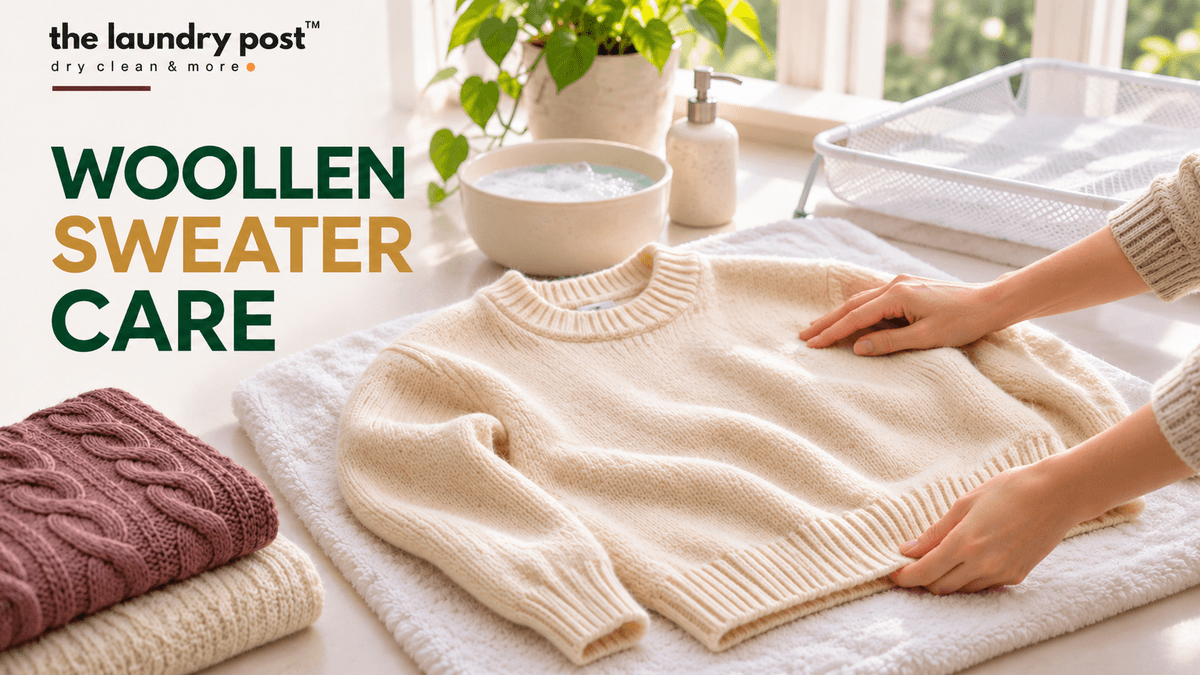
A woollen sweater goes into the wash looking perfect and comes out a size smaller. Or it dries on a hanger and the sleeves end up near your knuckles. Both are common after an Indian winter, when one favourite sweater is worn for weeks and then washed in a hurry. Shrinking and stretching have different causes, and a few habits avoid both. Here is how to read the label, wash by hand or machine when the label allows, dry the sweater properly and store it so it keeps its shape.
The word "wool" covers a lot of ground. Check the fibre content first, because it tells you which rules apply:
Shrinking happens when warmth, water and rubbing make wool fibres tangle and tighten, which is called felting. A hot wash, a long machine cycle or a rough spin can do it. A badly felted sweater cannot be fully recovered, so prevention matters more than repair.
Stretching is a weight problem. Wet wool is heavy, and a wet sweater on a hanger pulls itself downward. Take a typical case: a wool jumper is washed on Sunday and hung up to dry. By evening the shoulders have slipped and the hem has dropped, and no amount of ironing brings the shape back.
The label overrides every tip online. "Hand wash" means a gentle wash by hand. A wool or delicate machine cycle symbol means the maker expects the sweater to survive one. "Dry clean only" means do not take the risk at home, and a crossed-out tumble dryer symbol is very common on wool. If a symbol is unclear, this guide to laundry symbols on clothing labels explains them.
Hand washing is the safest choice when you are unsure.
If the sweater is dark or new, test a hidden spot first, because dye can bleed into the water.
When the label permits it, put the sweater in a mesh bag, choose the wool or delicate cycle with cool water and a low spin, and use a wool-safe detergent. Keep it away from heavy items such as jeans and towels. A gentle cycle in a front-loading machine is usually kinder than a rough top-loader cycle. For other garments, this comparison of hand wash vs machine wash helps you decide.
Lay the sweater flat on a clean towel or mesh rack in a shaded, airy spot. Reshape it while damp, paying attention to the ribbing, sleeves and length. Turn it after a few hours so both sides dry. Keep it away from heaters, radiators and hot midday sun, since heat can shrink wool. Do not hang it and do not tumble dry unless the label says it is safe. During monsoon, dry it indoors under a fan, not near a heater.
Wool does not need washing after every wear. Airing it between wears usually refreshes it. Store sweaters folded, not on hangers, so the shoulders keep their shape, and make sure they are clean and fully dry before they go away. For small homes, this guide on how to store out-of-season clothes in small Indian apartments has practical ideas.
Choose professional dry cleaning when the label says dry clean only, when the piece is structured or lined, when it has beadwork or embroidery, or when it is an expensive cashmere you cannot afford to experiment on. A sweater that has already shrunk may recover a little with gentle reshaping while damp, but felting cannot be undone.
Check the label, keep the water cool, avoid rubbing and wringing, and dry the sweater flat. Fold it for storage. Those four habits prevent most shrinking and stretching, and they cost nothing.
Only if the care label allows it. Use a mesh bag, a wool or delicate cycle, cool water and a low spin. If the label says hand wash or dry clean only, follow that instead of testing your luck.
Less often than other clothes. Air it between wears and wash only when it looks or smells dirty. Washing wool too frequently adds handling, which raises the chance of shrinking or stretching.
Slight shrinkage may ease with gentle reshaping while the sweater is damp. A badly felted sweater cannot be restored. For a valuable piece, ask a professional before trying anything yourself.
Usually because it was hung to dry or pulled while wet. Wet wool is heavy and loses shape on a hanger. Lay it flat on a towel and reshape it gently next time.
A mild, wool-safe liquid detergent is the safest choice. Avoid strong powders and bleach, and use only a small amount so the rinse stays clean.