

Laundry Symbols on Clothing Labels
10th Jun 2026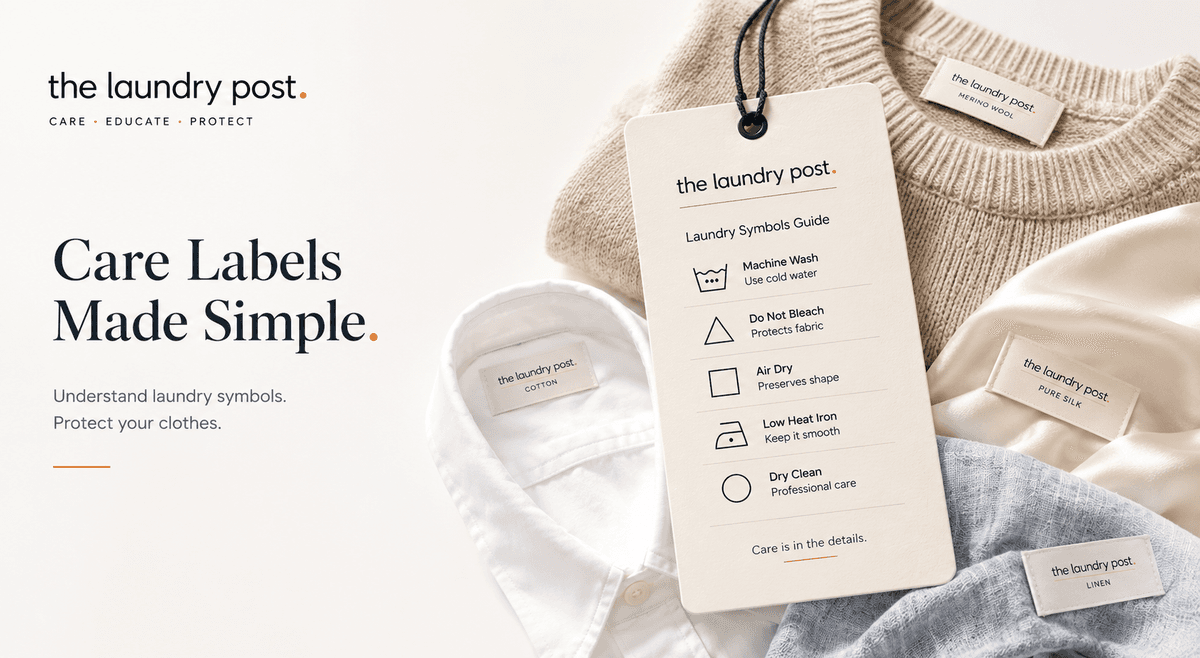
Last Tuesday, Sarah pulled her favorite wool sweater out of the dryer and felt her stomach drop. It had shrunk to fit a child. One missed glance at the care label had just cost her a garment she'd owned for three years. If you've experienced this sinking feeling, you're not alone. Thousands of people damage clothing every week simply because they ignore, skip, or misunderstand the small symbols printed on garment tags.
These symbols aren't decorative markings designed to confuse you. They're a universal language created to protect your clothes and your wallet. Understanding what they actually mean can extend the life of your wardrobe, preserve the look and feel of your favorite pieces, and prevent the kind of laundry disasters that Sarah experienced.
Many people view care labels as optional suggestions. They're not.
The symbols on your clothing exist because manufacturers know their fabrics better than anyone. They've tested their materials, identified their breaking points, and documented the safest ways to clean them. Ignoring these instructions isn't being adventurous; it's working against the chemistry of your fabrics.
Consider what happens to a cotton t-shirt washed in hot water. Heat accelerates dye molecules moving away from the fiber, which means color fading happens faster. A silk pillowcase tumbled in the dryer can lose its smooth texture in minutes because the friction damages the protein structure of the fiber. Wool shrinks when exposed to heat and agitation because the scales on each fiber swell and lock together.
Following care labels saves money in the long run. Your clothing lasts longer, maintains its original appearance, and fits properly. It also prevents the emergency trips to professional dry cleaners when you've accidentally damaged a favorite piece. For anyone managing a household budget, this is worth taking seriously.
The international laundry symbol system uses five basic categories. Each one controls a different part of the cleaning process.
The tub symbol is your starting point for understanding wash care. A simple tub with a number inside tells you the water temperature. The number 30 means 30 degrees Celsius (about 85 degrees Fahrenheit), while 60 means 60 degrees Celsius (about 140 degrees Fahrenheit). Higher numbers mean hotter water.
What matters is why temperature matters. Delicate fabrics and dark colors prefer cooler water. Heavily soiled items and whites tolerate hot water better. A hand with a tub symbol means hand wash only. An empty tub with a cross through it means do not wash at all, period.
The number of lines under the tub symbol also carries meaning. One line suggests a gentle or synthetic cycle. Two lines indicate extra gentle treatment. No lines mean normal washing cycles are fine. Most people miss this detail entirely, but it changes which machine setting you should use.

A triangle on your label refers to bleaching. An empty triangle means bleach is allowed. A triangle with diagonal lines means non-chlorine bleach only. Chlorine bleach damages many fabrics, particularly colored items and natural fibers like cotton and linen. Using it on restricted fabrics can create permanent yellow or white spots. A crossed-out triangle means no bleach whatsoever.
A square tells you about drying. A square with a circle inside means tumble drying is safe. Dots inside that circle indicate heat settings: one dot means low heat, two dots mean medium. A crossed-out circle means no tumble drying.
Some fabrics simply don't survive the dryer. Elastic can degrade from heat. Spandex loses its stretch. Delicate laces can tangle and tear. When you see a circle symbol with a cross through it, air drying is your only safe option. A line at the top of a square means dry on a line or hang dry. This gentle method is ideal for stretchy items and delicate fabrics.
An iron symbol shows whether ironing is recommended or forbidden. Three dots mean high heat (wool and heavy fabrics). Two dots mean medium heat (synthetics). One dot means low heat (delicates and velvets). A crossed-out iron symbol means do not iron at all. Some fabrics literally melt under an iron. Polyester can shine or become shiny. Sequins will lose their finish.
A circle indicates dry cleaning is safe. Letters inside that circle like P or W tell the dry cleaner what solvents to use. A crossed-out circle means no dry cleaning. This matters if you have specialty items like formal wear or vintage pieces that need professional attention.
Sarah's wool sweater wasn't a freak accident. It's the most predictable consequence of ignoring the hand wash symbol. Wool has a structure unlike cotton or synthetics. The scales on each fiber are designed to stay flat in cool water. Machine washing, especially with hot water and agitation, makes these scales swell and interlock. The sweater permanently tightens and hardens.
Activewear faces a different problem. Your gym clothes contain spandex or elastane to provide stretch. Tossing them in the dryer on high heat breaks down these elastic fibers chemically. After a few cycles, your favorite workout leggings lose their snug fit. They become baggy and unsupportive because the elastic has degraded. This is exactly why many people prefer a wash and fold laundry service that understands proper care for technical fabrics.
Silk garments suffer when people ignore bleaching symbols. A silk blouse faded by chlorine bleach shows permanent damage. The bleach chemically alters the fiber itself. No amount of rewashing will fix it.
Synthetic fabrics like polyester can melt or become shiny if ironed at the wrong temperature. The plastic-based fibers don't tolerate extreme heat. Pressing them too hard or too hot leaves permanent shine marks that look like stains.
Think of the symbols as increasing levels of care. The tub is your first checkpoint. Once you know the washing requirements, the triangle (bleaching) narrows your options further. The square (drying) adds another layer of specificity. The iron narrows down even more. The circle (professional cleaning) is the safest final option.
Start with the most restrictive symbol. If your sweater says hand wash, it definitely needs hand washing. You don't move up to machine washing just because you want to. You follow the most cautious instruction.
Expensive items deserve attention. A silk blouse that cost you a hundred dollars is worth five minutes of care. Delicate fabrics like cashmere, silk, and linen repay careful handling with years of wear. Formal wear including dresses, blazers, and special occasion outfits should always follow their labels precisely because these pieces are worn infrequently and need to stay pristine.
This is also where working with a professional laundry care service makes sense. Specialty fabrics and valuable pieces benefit from expert handling. If you're uncertain about how to properly care for something expensive or delicate, professional cleaning removes the guesswork.
Vintage or sentimental clothing absolutely deserves label-following. If a garment has emotional value or irreplaceable qualities, the risk of damage isn't worth saving time or money.
Laundry symbols are straightforward once you understand what each one represents. They exist because manufacturers genuinely want your clothes to last. Taking thirty seconds to read a care label prevents hours of frustration and weeks of regret when you've shrunk or damaged a favorite piece.
Your clothes represent real money spent and real resources used to manufacture them. Treating them according to their care instructions is the most basic respect you can show your wardrobe. The next time you do laundry, pause at the label. It's worth reading.
For questions about caring for specific fabrics or items, or if you need professional guidance on delicate garments, feel free to contact our team. Getting laundry right doesn't have to be complicated.
Ignoring care labels risks permanent damage including shrinkage, color fading, fabric degradation, and loss of garment shape. Wool shrinks from heat and agitation. Delicate fabrics tear in the dryer. Dyes bleed in hot water. These damages are typically irreversible, shortening your clothing's lifespan.
A square with a circle inside that has a cross through it indicates no tumble drying. Some labels show a crossed-out circle with a dot inside, also meaning do not tumble dry. These symbols typically appear on delicate fabrics, items with elastic, or garments that shouldn't experience heat exposure.
The triangle symbol controls bleaching. An empty triangle allows any bleach. A triangle with diagonal lines permits only non-chlorine bleach. A crossed-out triangle means absolutely no bleaching. Using chlorine bleach on restricted fabrics causes permanent staining and color damage that cannot be reversed.
While casual basics like basic cotton shirts often tolerate standard washing, checking the label is always the safer choice. Delicate fabrics, colored items, and specialty materials require specific care. Following labels prevents expensive mistakes and extends garment lifespan. Even ten seconds to read the tag protects your investment.
The international laundry symbol system is standardized across most countries, making symbols consistent globally. However, some older garments or items from specific regions may use different markings. Modern clothing from major manufacturers follows the same universal symbol language, making them easy to understand regardless of where you shop.
Not all fabrics need the same care, and that's exactly why professional guidance matters.
When you're unsure about care labels, damaged something precious, or simply want to extend the life of your favourite pieces, our experts know exactly how to treat them.
📅 Book Your Professional Laundry Pickup