


remove colour bleeding stains from clothes
15th Nov 2026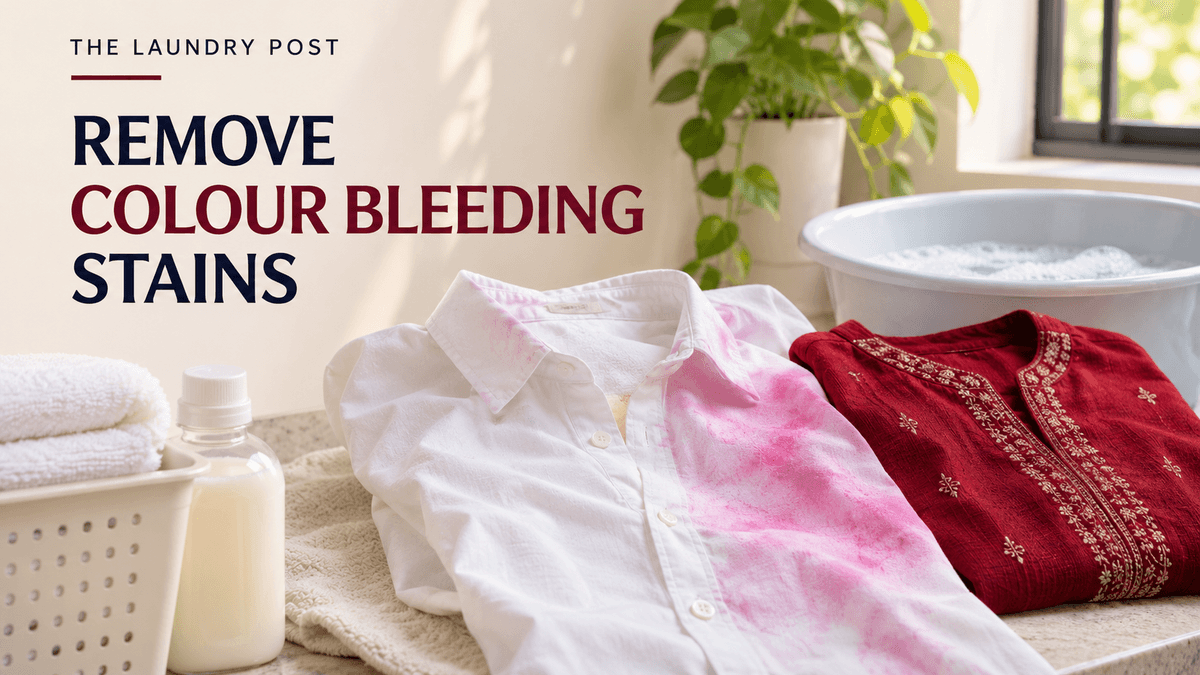
You pull a white cotton shirt out of the machine and it has gone a soft, uneven pink. A new red kurta in the same load is the obvious suspect. This happens in Indian homes all the time, especially with bright festive wear, dark denim and fresh dupattas. The stain looks permanent, but colour bleeding stains on clothes can often be reversed if you act before the garment dries. Here is why dye transfers, what to do in the first few minutes, how different fabrics respond, and when it is wiser to stop and ask a professional.
Colour bleeding happens when dye that is not fully fixed to a fabric dissolves in water and settles on another piece. New garments and deep shades such as red, maroon, navy and black release the most loose dye, and absorbent fabrics like cotton and viscose pick it up easily. Warm water, long soaking and an overstuffed drum give the dye more chance to travel. Even a damp coloured shirt left on top of your whites in the laundry basket can transfer colour, with no machine involved.
Rewash the stained garment before it dries, in cold or lukewarm water with detergent and, if the fabric is colourfast, a colour-safe (oxygen-based) bleach or a colour run remover. Do not dry, iron or leave it in strong sun until the stain is gone. The order below works best:
Heat is the real enemy. It helps dye bond to the fibres, so a tint that would have lifted in the first hour can turn stubborn after one cycle in the dryer or one pass of a hot iron. If the whole load picked up a tint, treat the colourfast whites together so the loose dye has nowhere new to settle.
White cotton and linen are the most forgiving, and a colour-safe bleach soak usually works. Chlorine bleach is best skipped. On blends and some synthetics it can leave a yellow cast, and it should never go near silk, wool or coloured pieces.
Coloured clothes stained by another colour need extra caution, because whatever lifts the stain may also lift the garment's own dye. Spot test first and use colour-safe products only.
Polyester, nylon and elastane blends do not like strong treatments or heat. Keep the water cool and the soak short.
Silk, wool, rayon and anything with zari, sequins or embroidery should not be soaked or scrubbed at home. Many of these appear on our list of clothes you should never wash at home in India.
White vinegar and baking soda are often suggested for colour runs. Results vary with the dye and fabric, so treat them as a gentle first try on sturdy cotton, not a guaranteed fix. Use one product at a time, rinse in between, and never combine bleach with vinegar or ammonia-based cleaners, because the fumes can be harmful. Hard scrubbing is another common mistake. It can rough up the fabric and spread the colour further.
Stop home treatment when the garment is expensive or sentimental, when the fabric is delicate, when the colour has already been through heat, or when two careful rounds have not helped. Repeated soaking can weaken fibres and fade the original colour. Professional dry cleaning lets the treatment be matched to the fabric. Tell the cleaner what caused the stain and what you have already tried. No process can promise full removal on every dye, so ask for an honest assessment first.
Sort whites, lights and darks, and wash new coloured clothes alone for the first few washes. Turn garments inside out, use cool water and leave some room in the drum. Do not let damp clothes pile up in the basket. Colour-catcher sheets can reduce dye pick-up, though they are not foolproof, so keep deep reds and blues apart anyway.
Colour bleeding feels like a disaster, but speed matters more than any product. Keep the garment wet, skip the dryer, test before you treat and choose colour-safe methods for the fabric in hand. If the piece is delicate or special, a careful professional assessment costs less than a ruined outfit.
Sometimes, but it is harder. Heat sets dye into the fibres, so expect repeated soaks with a colour-safe bleach or colour run remover, and spot test first. If the garment is valuable or delicate, get a professional opinion rather than risk more damage.
Rewash them while still damp, in cold or lukewarm water with detergent and a colour-safe oxygen bleach or colour run remover, following the pack instructions. Check in daylight before drying and repeat the soak if a tint remains.
It is often suggested, but results vary by dye and fabric. Try it only as a gentle first step on sturdy cotton after a spot test. Never mix it with bleach, and move to a colour-safe stain remover if nothing changes.
Chlorine bleach is not, as it strips colour and can damage some fibres. Colour-safe oxygen bleach is gentler but still needs a spot test and a suitable fabric. Avoid both on silk and wool.
They can reduce loose dye in the wash, but they do not guarantee protection. Sorting colours, washing new items separately, using cool water and not overloading the drum still matter.
Colour run on a garment you can't afford to lose? Let a fabric specialist look at it.
The Laundry Post offers dry cleaning with doorstep pickup and delivery across Ahmedabad, Surat, Rajkot and Gandhinagar.