


Laundry Tips
24th Jun 2026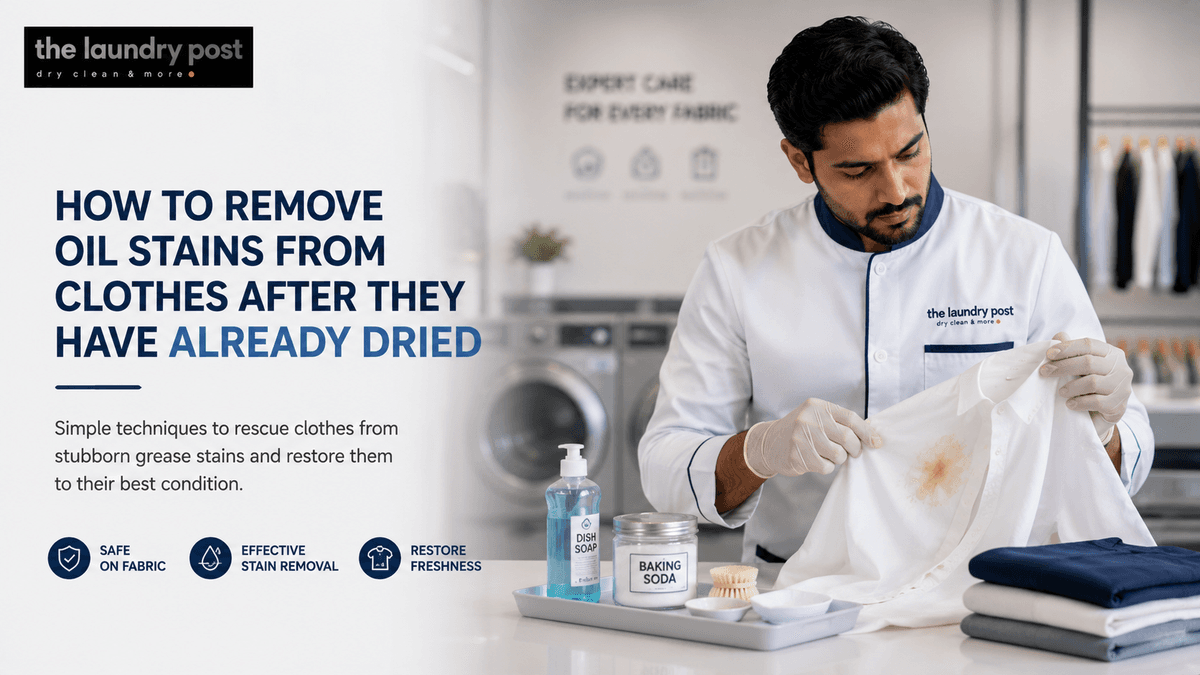
You pull a favourite shirt out of the laundry, hold it up to check, and there it is. A dark, stubborn patch right in the middle. A cooking oil splash you never noticed before putting it in the wash. And now, after a full cycle and a round in the dryer, it has set itself firmly into the fabric.
This happens more often than most people realise. The tricky part is that dried oil stains behave very differently from fresh ones. Once heat gets involved, whether from a dryer or even air-drying in direct sunlight, the oil bonds more deeply with the fabric fibres. Regular washing alone will not lift it out at that point.
The good news is that dried oil stains on clothes are not always a lost cause. With the right approach and a little patience, you can often still get that stain out.
Fresh oil sits on top of fabric fibres and can be lifted fairly easily if you catch it quickly. But when a garment goes through a wash cycle without the stain being pre-treated, and especially when it passes through a hot dryer, the heat essentially bakes the oil into the fibres.
This is why you might notice a shirt comes out of the dryer looking even darker in one spot than it did going in. The heat sets the stain and makes it far more stubborn. At this point, standard detergent and water will not cut through it on their own.
Before applying anything to the fabric, take a moment to do a quick assessment.
Read the care label first. Delicate fabrics like silk, wool, or anything marked dry-clean only need a gentler approach. For most cottons, linens, and synthetics, home treatment works well.
Test your product in a hidden area. Whatever you plan to use (dish soap, baking soda, a commercial pre-treatment spray), apply a small amount on an inner seam or hem first. Wait a few minutes and check for discolouration before moving to the visible stain.
Do not re-wash before treating. Many people throw the garment straight back into the machine hoping a second wash will sort it. It usually does not, and another hot cycle can set the stain further. Treat first, then wash.
This approach works well for cotton, denim, polyester, and most everyday fabrics.
Dish soap is one of the most effective tools for cutting through grease stains from fabric. It is specifically formulated to break down oil. Apply a small amount directly onto the stain and work it in gently with your fingers or a soft toothbrush. Let it sit for 20 to 30 minutes.
After the dish soap has had time to penetrate, sprinkle a layer of baking soda or cornflour over the treated area. These powders help absorb the oil that the soap has started to lift. Leave it for another 15 to 20 minutes, then brush away gently.
If the stain is particularly old or dark, a pre-treatment spray or gel at this stage can boost your results. Follow the product instructions and allow it to soak in properly before moving to the wash.
Check the care label for the maximum wash temperature the fabric allows, then wash accordingly. Warmer water helps dissolve oil residue more effectively, as long as the fabric can handle it.
This step is critical. Once the wash cycle finishes, check the stain before putting the garment back in the dryer. If any trace remains, repeat the treatment from Step 1. Returning a still-stained garment to the dryer will set the oil again and make it significantly harder to treat next time.
You do not need anything expensive or hard to find. These are likely already at home:
Dish soap: A reliable first choice for breaking down dried grease marks. Works on most fabric types.
Baking soda: Functions as an oil absorber and gentle scrub when combined with dish soap.
White vinegar: Useful for loosening residue in the final rinse. Half a cup added to the rinse cycle can help lift what the wash left behind.
WD-40 (used sparingly): This may sound unexpected, but some people apply a tiny amount to re-lubricate an old, hardened stain before treating it with dish soap. The idea is to bring the oil closer to a semi-fresh state so the soap can work on it. If you try this, use it very minimally and always follow through with a thorough dish soap application and a full wash cycle. It is not a method for delicate fabrics.
The right approach depends on what the garment is made from.
Cotton and linen: These are forgiving materials. The dish soap and baking soda method works well and can be repeated if needed.
Synthetic fabrics (polyester, nylon): Dish soap works here too, but avoid very hot water as it can distort the fibres. Warm water is safer.
Delicate fabrics (silk, chiffon, wool): Avoid vigorous scrubbing or strong products. These fabrics need careful handling, and in most cases, a professional service is the safer choice. Trying to remove a stubborn oil mark from silk at home can permanently damage the weave or finish.
Dark and printed fabrics: Always test on a hidden area first. Some stain removers can cause lightening or fading on dark colours or printed patterns.
If you are dealing with a garment made from fine fabric and are unsure about treating it at home, it helps to look at what professional fabric care actually involves before deciding. The steam ironing and fabric care service page gives a good sense of how professional handling differs from home washing, particularly for delicate items.
Removing old oil stains is mostly about doing things in the right order. These are the mistakes that most often cause treatments to fail:
Rubbing instead of dabbing. Rubbing spreads the stain outward and pushes it deeper into the fibres. Always work from the outer edge of the stain inward, using gentle dabbing or light circular motions.
Applying heat before the stain is treated. This is the most common and most damaging mistake. Even hot water before pre-treatment can set the oil further into the fabric.
Skipping the patch test. Testing on a hidden area takes two minutes. It can save a garment from permanent discolouration or damage.
Giving up after one attempt. Dried oil stains, especially ones that have been through the dryer, sometimes need two or three treatment rounds. Patience matters here. Repeat the process before concluding that the stain cannot be removed.
Some stubborn oil marks simply will not budge at home. This is especially true when the fabric is delicate, when the stain has gone through multiple hot wash-and-dry cycles, or when the garment has significant value.
If you have tried the home methods two or three times without success, handing the garment over to a professional gives it the best remaining chance. Professional services have access to stronger solvents and controlled temperatures that are appropriate for specific fabric types but not practical for home use.
You can explore more fabric care guidance across a range of garment types on the blog, or get in touch directly to ask about treatment options for a specific item before committing.
Yes, in most cases. Dried oil stains are harder to remove than fresh ones because heat sets the oil deeper into the fabric, but they can usually be lifted with dish soap, baking soda, and a proper pre-treatment soak before re-washing. Older or heat-set stains may need two or three treatment rounds.
Heat from the dryer or direct sunlight causes the oil to bond more deeply with fabric fibres and oxidise slightly, which makes the mark appear darker. This is why it is important to always check clothing for stains before putting it in the dryer, not after.
Dish soap is generally the most effective starting point because it is designed to cut through grease. Applying it directly to the stain, letting it sit for 20 to 30 minutes, and following up with baking soda to absorb the loosened oil works well for most cotton and synthetic fabrics.
Baking soda is useful for absorbing oil that has been loosened by dish soap or another degreaser, but on its own it is usually not enough to fully remove a set stain. It works best as part of a combined treatment rather than as a standalone fix.
If the garment is made from silk, wool, or a dry-clean-only material, professional treatment is the safer first step rather than a last resort. For everyday fabrics, if two or three rounds of home treatment have not worked, a professional service is worth considering before the stain becomes permanent.
Still dealing with a stubborn oil stain that just won't come out, no matter how many times you've treated it?
Our team handles all types of fabric and stain situations, from everyday cotton shirts with dried grease marks to delicate garments that need careful professional treatment, so your clothes come back clean without any risk of damage.