


Best Fabrics for Indian Summer
22nd May 2026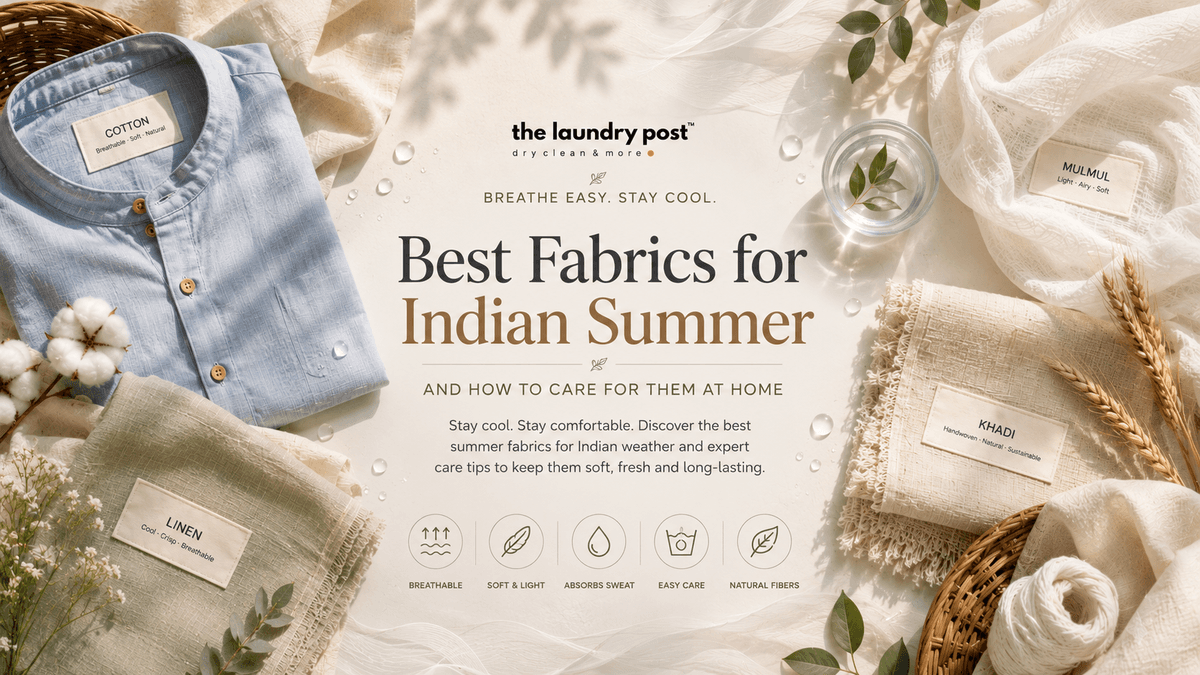
If you've ever stepped outside in Ahmedabad in May wearing a synthetic shirt, you already know what it feels like to regret a clothing choice. It's not just uncomfortable. It's suffocating. Indian summers are a different beast altogether, the kind of heat that makes you reassess every piece of clothing you own.
The good news? The right fabric genuinely changes the experience. Not slightly. Dramatically. People across India figured this out centuries ago, which is why our traditional textiles cotton, mulmul, khadi were never just cultural choices. They were survival choices. And they still are.
Most people blame themselves for sweating too much. In reality, they're wearing the wrong material. Fabric determines how quickly moisture evaporates, how much heat your skin retains, and how freely air moves around your body.
In a country where temperatures regularly hit 40°C to 47°C, especially across Rajasthan, Gujarat, and the Gangetic plains, fabric isn't a style decision. It's a practical one. Choosing a breathable fabric in summer isn't just about comfort, it also affects skin health, body odour, and yes, how long your clothes last.
There's a reason every Indian household has a stack of cotton kurtas or cotton sarees. Cotton absorbs moisture from the skin and allows it to evaporate naturally. It's soft, it washes easily, and it doesn't trap body heat the way synthetic blends do.
For summer specifically, lighter cotton weaves work best. A 100% combed cotton shirt feels entirely different from a cotton-polyester blend in 42°C heat. The blend retains heat; pure cotton breathes.
How to care for cotton at home:
If you're unsure about washing a delicate cotton garment, a professional laundry and fabric care service can help preserve its texture and colour over the long term.
Linen has been making a quiet comeback, and honestly, it deserves all the attention. Made from flax fibres, linen is one of the most breathable fabrics you'll find. It's a little stiffer than cotton, gets wrinkly fairly quickly, but cools down the body faster than almost any other natural fabric.
Linen shirts in an air-conditioned office are a staple for a reason. The fabric keeps you cool during the commute and looks presentable once you're inside.
Linen fabric care at home:
Linen wrinkles easily, which is its biggest complaint. But that's also a sign that it's breathable. If your linen pieces need a proper refresh, a professional dry cleaning service can restore their appearance without damaging the delicate fibres.
Mulmul is extremely lightweight, almost sheer, and woven loosely enough to let air flow through constantly. It's used widely for summer kurtas, dupattas, and baby clothing and for good reason. The weave is so open that wearing mulmul in summer feels like wearing barely anything at all.
It's not the most durable fabric, and it does require gentle handling. But for peak summer months, especially May and June, mulmul is hard to beat.
Care is simple: hand wash gently in cold water, use very mild detergent, and dry flat. Avoid wringing.
Rayon (also called viscose) is a semi-synthetic fabric made from plant cellulose. It drapes beautifully and feels cool against skin, which is why it's so common in summer dresses, kurtis, and casual wear.
However, rayon has a problem: it doesn't handle humidity well. In coastal cities like Mumbai or Chennai, rayon can feel clingy once you start sweating. It works better in drier heat.
Also, rayon is fragile when wet. Rubbing or wringing it will damage the fabric permanently. Gentle hand washing or dry cleaning is the safest route.
Khadi is often underestimated. People associate it with a certain kind of aesthetic, but the fabric itself is genuinely functional. Because it's hand-spun and hand-woven, the yarn is thicker and the texture slightly coarser which actually creates air pockets in the weave. Those air pockets regulate body temperature surprisingly well.
Khadi keeps you cool in summer and slightly warm in mild winters. It's breathable, it's sustainable, and it gets softer with every wash.
Polyester, nylon, and acrylic are the big three to avoid in Indian summer. They trap heat, don't absorb sweat, and make the skin feel irritated quickly. Even if these fabrics look good or are cheaper, the discomfort in 44°C is just not worth it.
Silk is beautiful but isn't practical for everyday summer wear. It's a fabric for cooler evenings or air-conditioned environments. Wearing it during a long train journey in June? A very bad idea.
Summer fabrics get washed more frequently, which means they also wear out faster if not handled correctly. Here are a few things that make a real difference:
If you're dealing with delicate or heavily soiled summer garments, it helps to reach out to a professional care expert rather than risk damaging them at home.
Washing linen in hot water is one of the most common ones. It makes the fabric stiff and prone to tearing. Another frequent mistake is ironing dry cotton. It doesn't press well and you end up pressing creases harder rather than removing them.
Storing clothes that aren't fully dry is another problem, especially during monsoon season. Even a trace of moisture can cause yellowing or mildew within days in humid weather.
Fact: Fabric type matters far more than colour. A dark mulmul or linen kurta will keep you cooler than a white polyester shirt. The weave structure and fibre type determine heat retention, not just the colour.
Fact: When done correctly, professional dry cleaning is actually gentler on fabrics like linen, rayon, and silk than aggressive machine washing at home. The key is choosing a service that specialises in fabric care.
Indian summers aren't getting any cooler, and the wrong fabric makes a hot day miserable. The good news is that the best options cotton, linen, mulmul, khadi are widely available, affordable, and part of our own textile heritage. They work because they were designed for this climate.
Taking care of these fabrics properly extends their life significantly.
Gentle washing, shade drying, and storing them clean are small habits that add up over time. And for garments that need a little more attention, professional help is always a good idea.
Wear what makes sense for the heat. Your body will thank you.
Cotton is the most practical choice for everyday summer wear in India. It's breathable, absorbs moisture well, and is easy to maintain. Linen and mulmul are excellent alternatives, especially for lighter tasks or daytime use.
Always use cold or lukewarm water, not hot. Use a gentle detergent, avoid the heavy machine cycle, and dry in shade rather than direct sunlight. If the garment has a specific care label, follow that first.
Yes, but use the delicate cycle with cold water and mild detergent. Avoid tumble drying. Laying it flat to dry or hanging it immediately after washing prevents heavy creasing and maintains the fabric's shape.
Polyester, nylon, and other synthetic fabrics should be avoided. They don't breathe, trap sweat close to the skin, and feel uncomfortable quickly in humid conditions. Rayon can also feel clingy in high humidity.
Soak the stained area in a solution of cold water and a small amount of white vinegar for 20 to 30 minutes before washing. For stubborn stains on lighter fabrics, a gentle enzymatic detergent works well. Avoid hot water as it can set the stain permanently.
Worried your favourite cotton kurta or linen shirt won't survive another summer of rough washing? Let the experts take over.
Our team handles all summer fabrics, from everyday cotton to delicate mulmul, with professional laundry and dry cleaning that keeps colours bright, textures soft, and fabrics lasting longer.